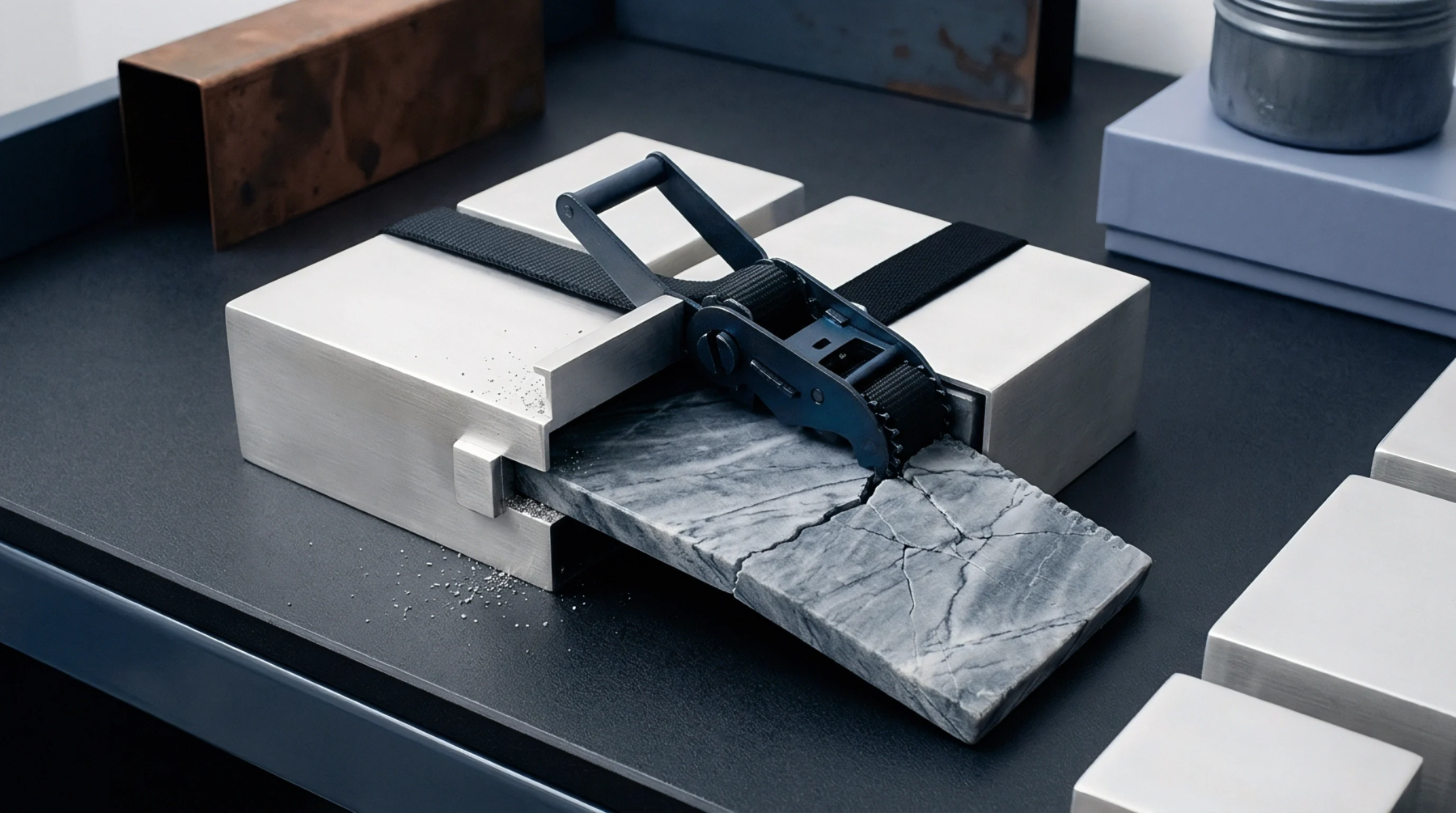
Meaning
Amorphous polymers undergoing physical aging experience a gradual reduction in the unoccupied space between molecular chains. The free volume collapse describes this densification, where the excess volume trapped during rapid cooling slowly escapes as the material relaxes toward thermodynamic equilibrium. This process sets the limits of material performance by increasing density while decreasing chain mobility.
It marks the boundary where a polymer becomes harder but more brittle over time.
Structural Relaxation
Below the glass transition temperature, polymer chains lack the thermal energy to rearrange quickly, yet they slowly pack closer together. This gradual rearrangement drives the free volume collapse, reducing the overall transport properties of the material. Measurements of gas permeability and moisture absorption reveal this shift, as the tighter molecular packing limits the diffusion of small molecules.
This reduction can affect the barrier properties of packaging materials.
Mechanical Shift
The physical consequences of this collapse appear as changes in the mechanical properties of the molded part. As the free volume collapse progresses, the material shows higher yield strength but lower impact resistance. This makes the product susceptible to cracking.
Processing Variable
Fast cooling rates freeze a higher amount of free volume into the polymer. This creates a highly unstable state that undergoes rapid relaxation during subsequent storage. This evolution must be controlled.